Saint Fiachna
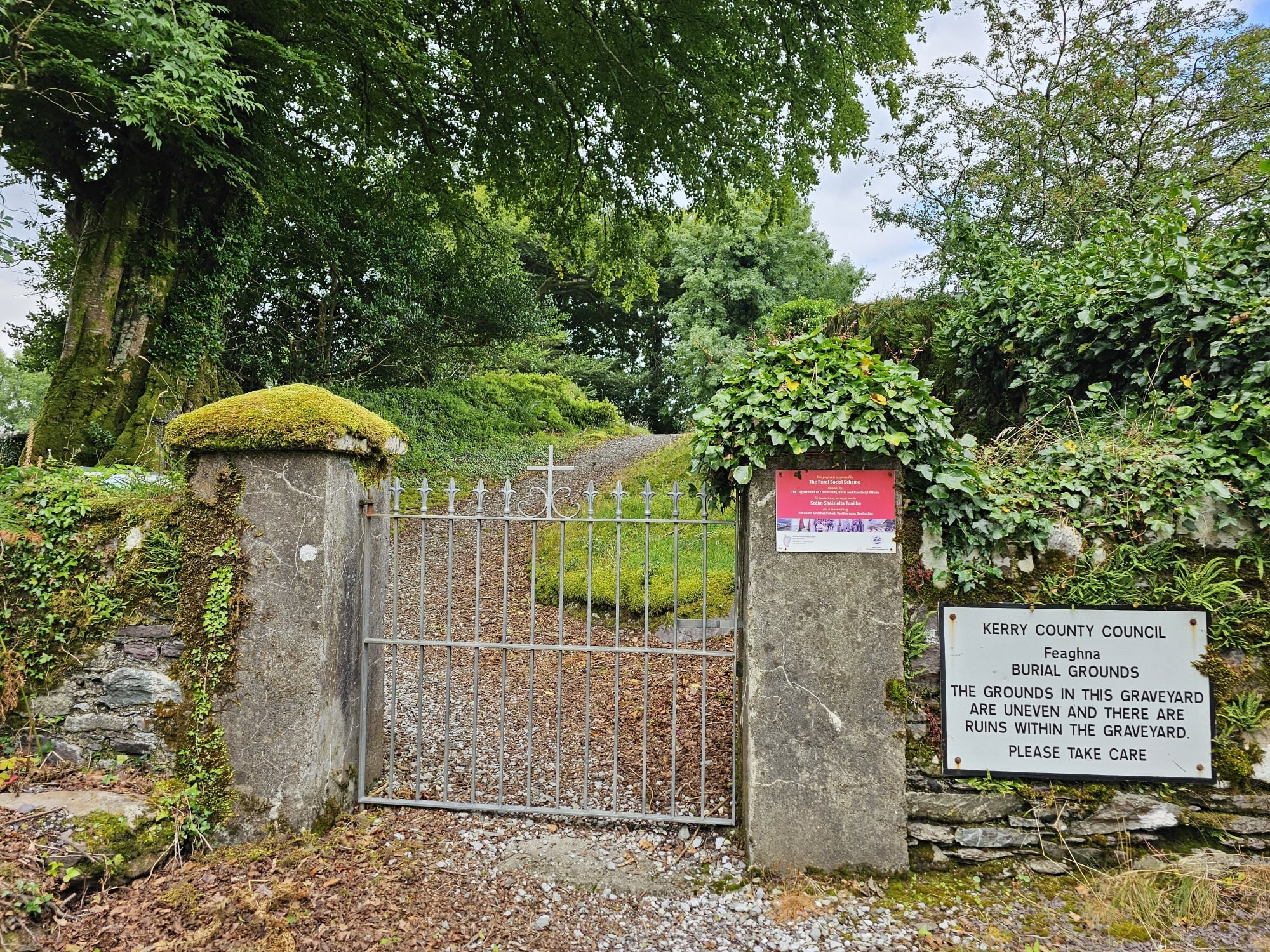
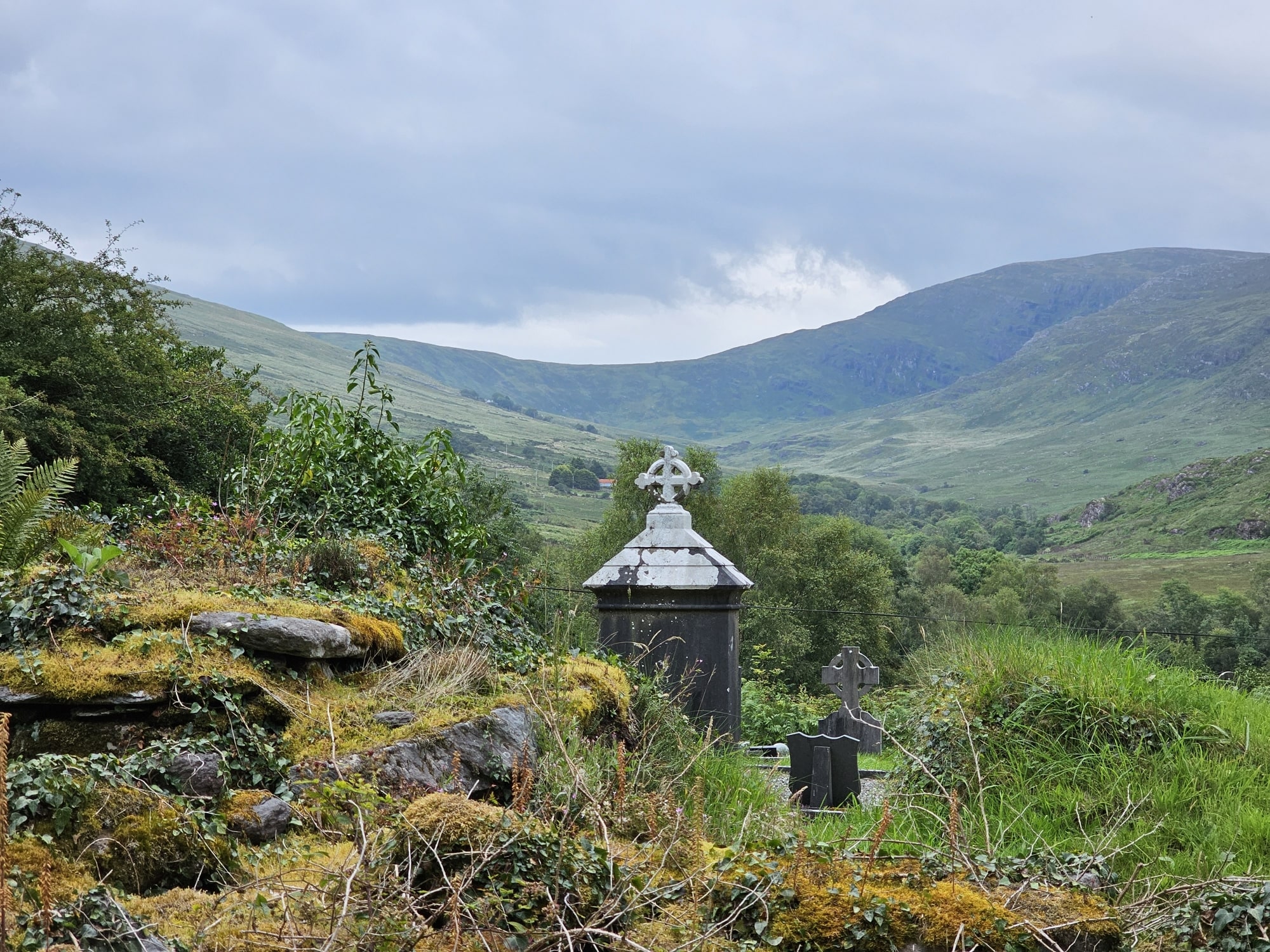
St. Feaghna’s Graveyard is serenely situated on the spectacular Priest’s Leap route, 2.5 kilometres off the N71 Kenmare/Glengarriff road. St. Feaghna is the patron saint of Bonane and was born in Kealkil, Co. Cork, allegedly, as one of triplets born into an already large family. In his early ministry, he built a church known locally as Tempall Feaghna at the graveyard. This structure is the most ancient ecclesiastical site in the valley, dating back to the 6th century AD. The original church may have been constructed of wood but was later replaced by a stone building, the ruins of which are still visible today.
Nowadays these ancient ruins serve as a reminder of our early Christian heritage and reveal an enduring faith and devotion to God. Surrounding these ancient ruins, the graveyard known locally as Drom-Feaghna has slowly emerged over the centuries. It’s one of the oldest Christian burial sites stillin use in Ireland and almost certainly dates back to early Christian times.
A large Beech tree nobly greets one’s arrival at this hallowed ground where many of the Sheen Valley’s countless generations have made their final resting place. This graveyard consists of an inner wall and an outer wall. The outer wall was constructed during the time of the Great Famine in the 1840s as a funded relief project. This enabled local workers to benefit from much needed payment to sustain their starving families in a blight-ridden community. The inner wall or embankment, also in evidence today, is a much older structure – possibly dating back to pre-Christian times. It may have been linked to the nearby multiple bullaun stone known as the Rolls of Butter. The graves that lie between these two walls are known as cilleanachs. The unhallowed ground here, was the burial area for suicide victims, un-baptised babies and still-births, as it was not allowed for these people to be buried in consecrated ground at that time. The little grave markers can still be seen today – a testimony to a forgotten era when harsh church rules governed its devout followers.
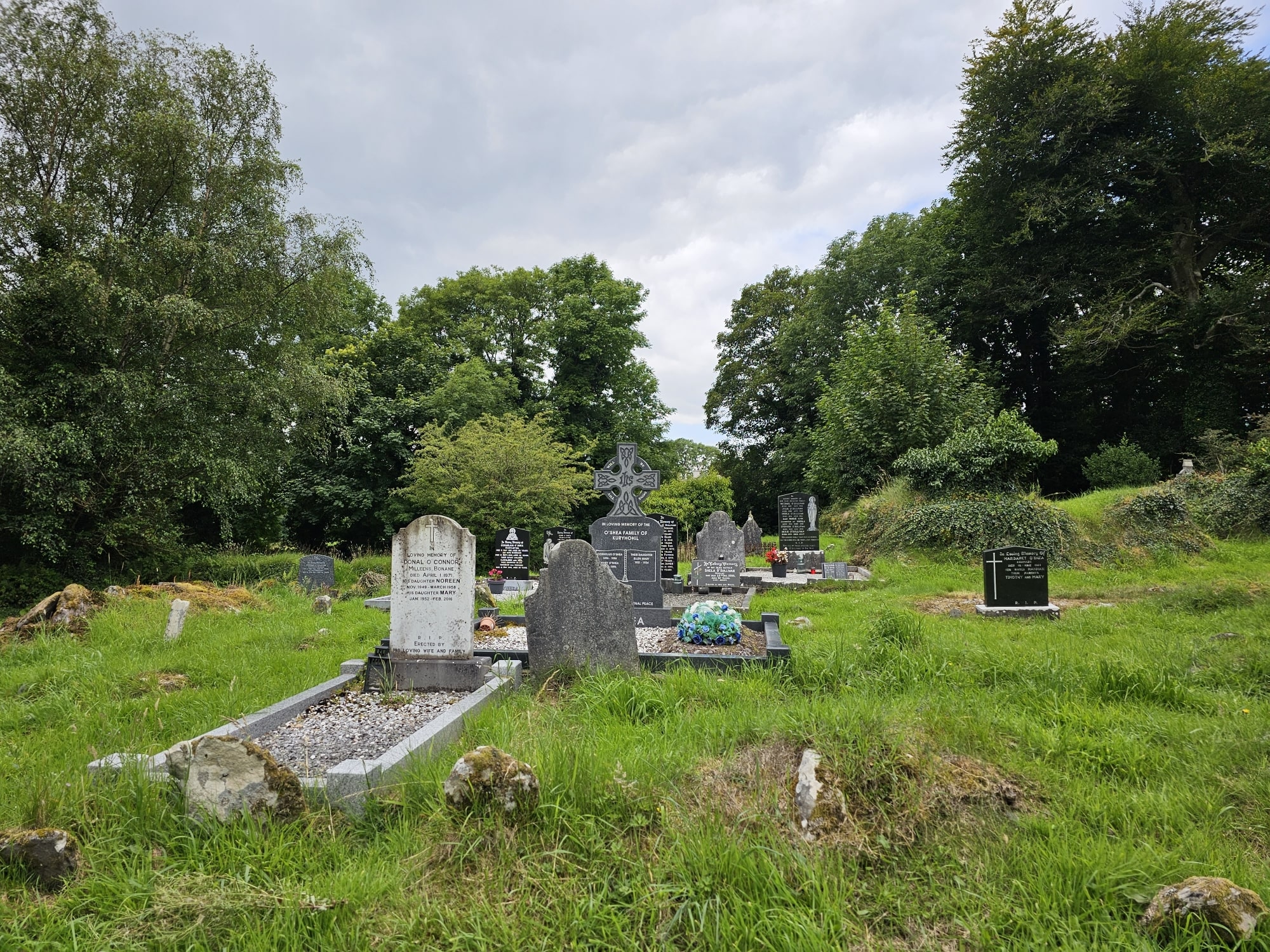
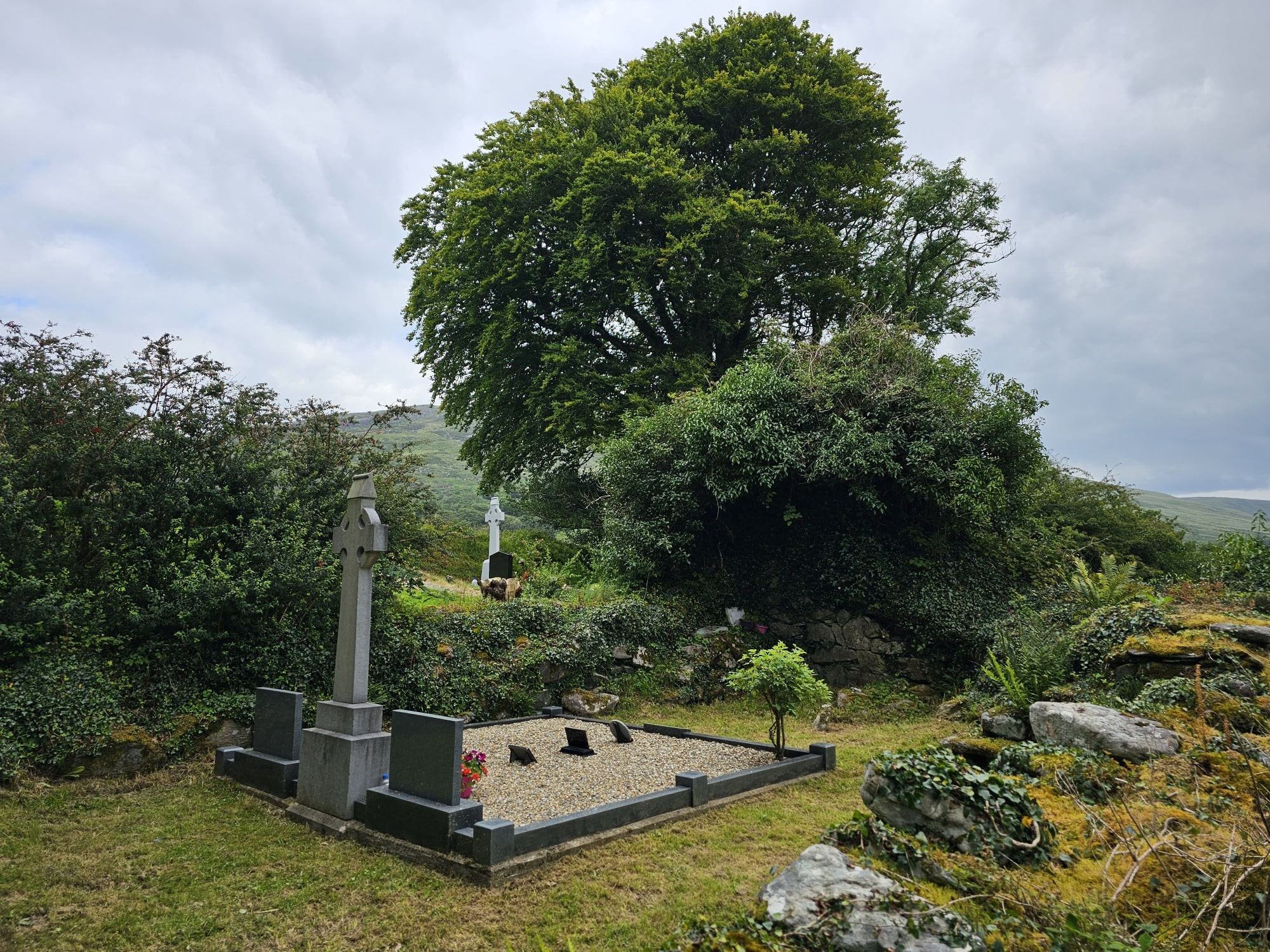
There are several notable tombs in this graveyard – some are in good condition while others have collapsed or subsided over time. These tombs were the final resting places of important people in the community. The oldest dated headstone in evidence at St. Feaghna’s Graveyard goes back to 1815, however a smaller headstone, apparently with Ogham (Ancient Celtic) writing on it, suggests the presence of a pre-Christian burial place.
Traditionally, many pilgrims would visit St. Feaghna’s Graveyard to perform a Catholic ritual known as The Rounds. Performed on consecutive days – usually Friday, Saturday and Sunday, it involves the pilgrim praying at various points along a designated pathway leading around the church ruins. It’s customary that a token brought from home, like a coin or a hair-clip is left in the eastern gable of the old church. To complete the Round, the pilgrim continues to the holy well which lies in a field adjacent to the graveyard, where more prayers are recited. The Round is usually made for the repose of the holy souls or for petitioning the Lord’s favour to cure illness. There have been many cures attributed to the Rounds over the years, which is why the practice still lives on in the local community.
 Bonane