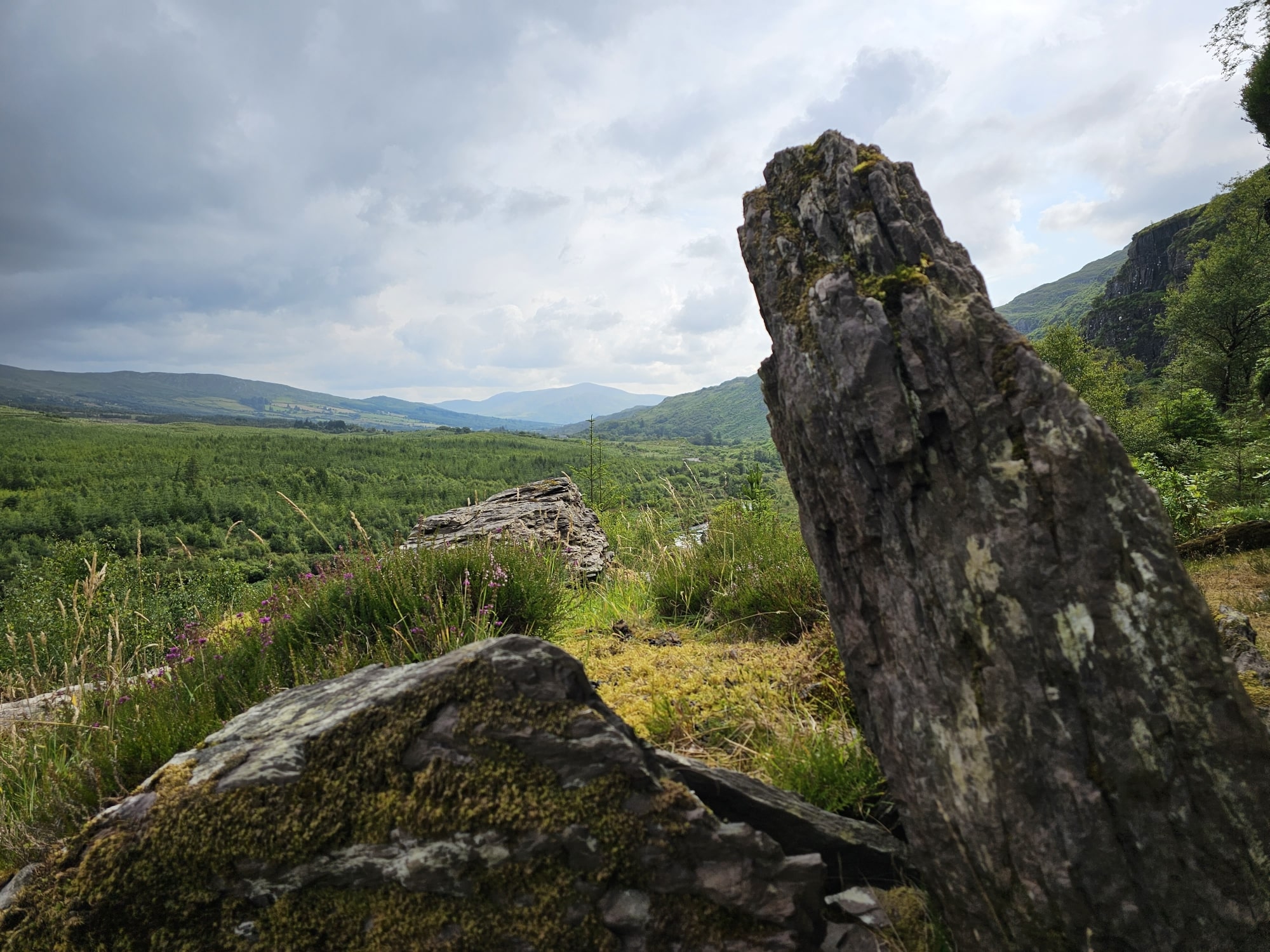
History of Bonane
Bonane is the southernmost parish in Kerry, a charming settlement nestled in the picturesque Sheen River Valley. Positioned along the N71 road midway between the market town of Kenmare in South Kerry and the village of Glengarriff in West Cork, the valley boasts a wealth of archaeological heritage. From prehistoric to post-medieval times, several hundred recorded monuments dot the landscape.
It is surrounded by the Sheehy and Caha mountains, with the Sheen River flowing through it. The name Bonane has its origins in Gaelic, specifically from the legendary leader of the Fianna, Fionn Mac Cumhall. Originally known as Both-Fhionáin, it has since been anglicized to Bonane. The local river, named after Fionn’s son Oisin, was initially called Abha Oisin but is now known as the River Sheen.
The Sheen River, originating in Bonane as the Baurearagh River, meanders beneath historic stone bridges before emptying into Kenmare Bay. The N71 national secondary road closely follows the river’s course, passing through Bonane, where the village’s school and church stand. This road serves as a vital link between Kerry and Cork, culminating at Turner’s Rock. Tranquil backroads provide excellent opportunities for walking, cycling, and horse-riding. The village also lies along the renowned Beara Way.
Folklore And Legends
In true Celtic fashion, much of the history of Bonane is to be found in the folklore and legends handed down through the generations rather than in written form. Indeed, the folklore of Bonane has echoes of some of the great Celtic legends and is, in this sense, a microcosm of Celtic culture.
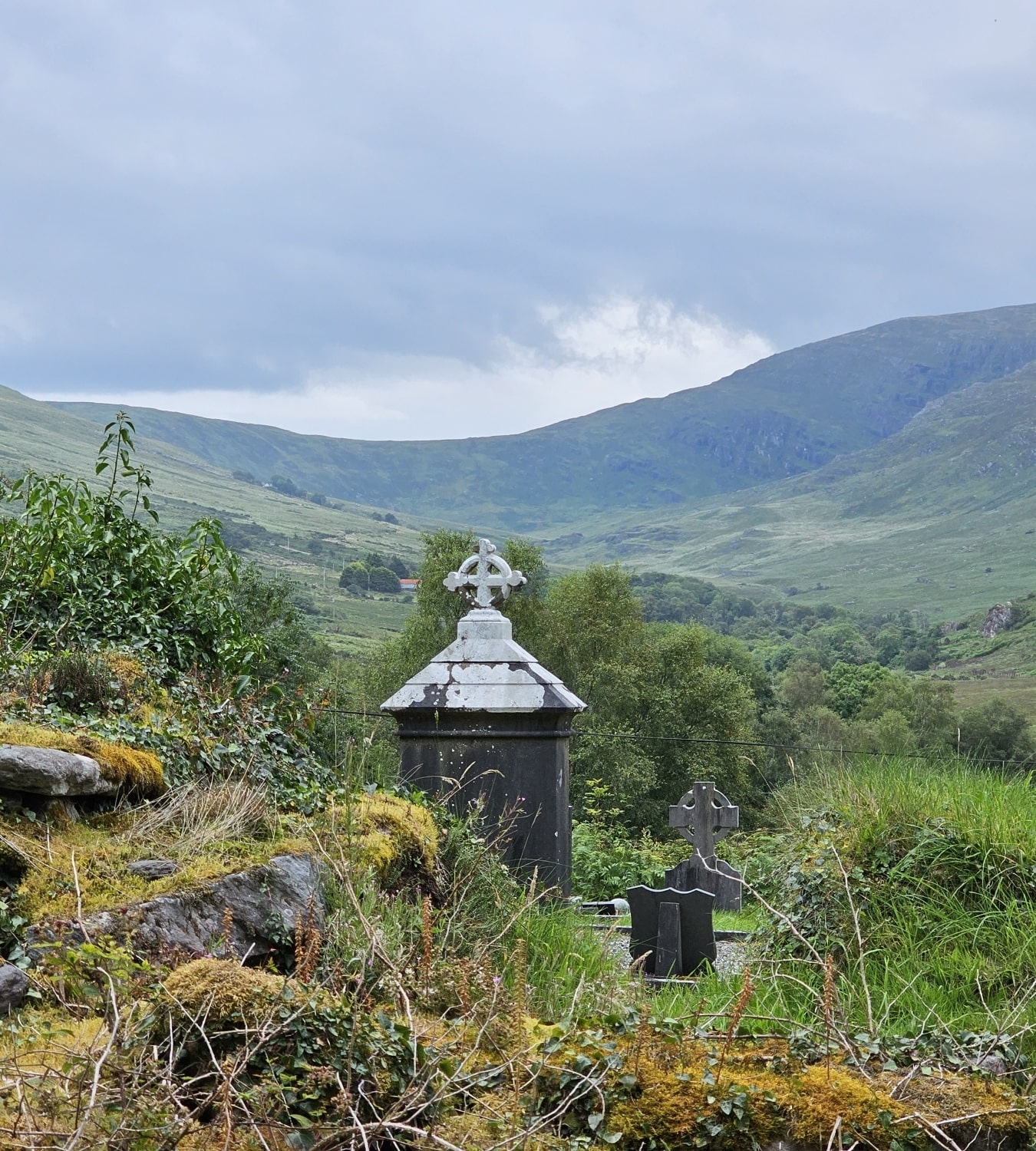
The patron saint of Bonane, has an intriguing legend associated with his birth. Was an early Irish monk venerated as a saint.
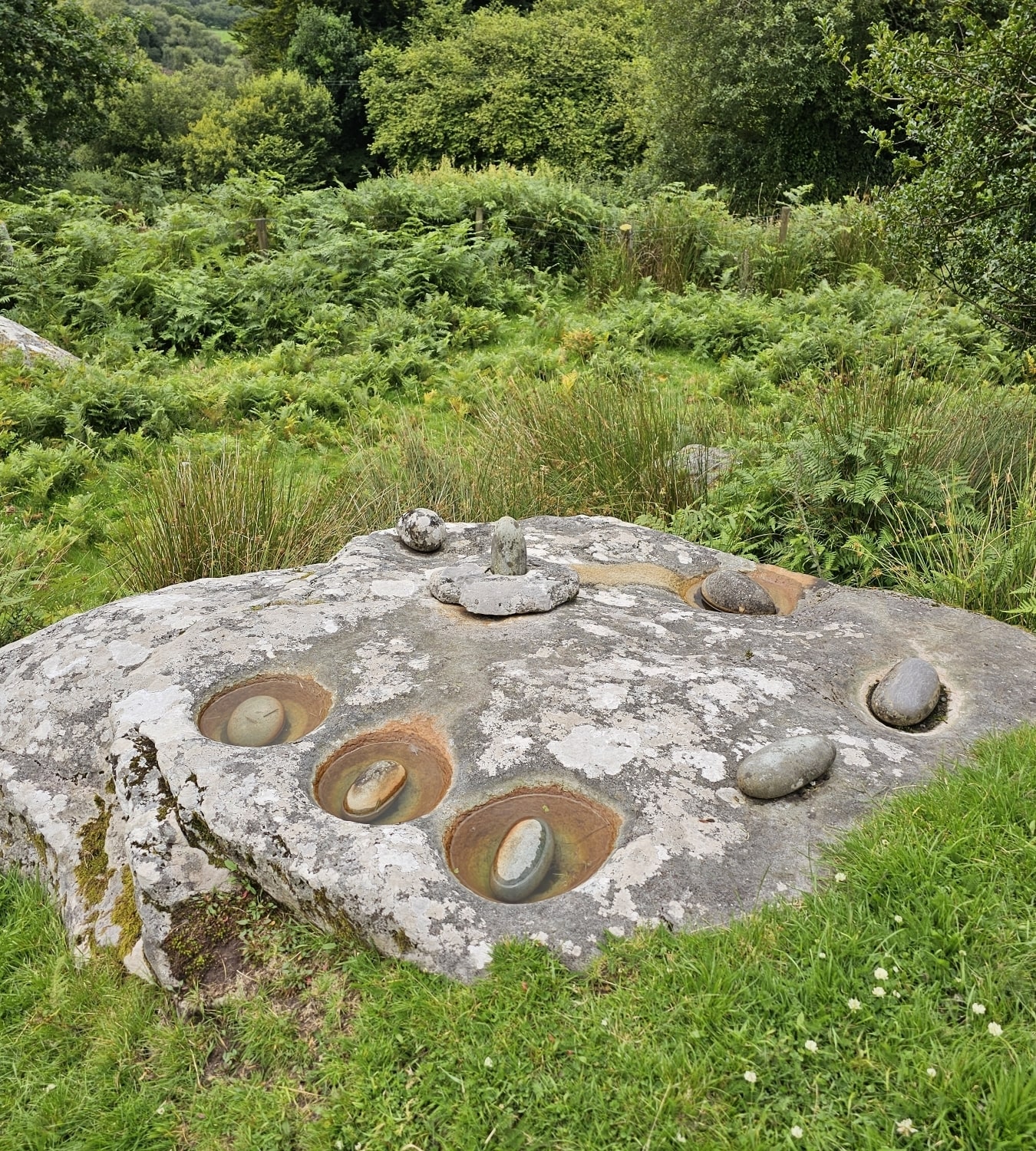
Also known as “The Petrified Dairy”, “The Stone of the Warts” or “The Cursing Stones” is a bullaun stone with eight spherical pebbles.
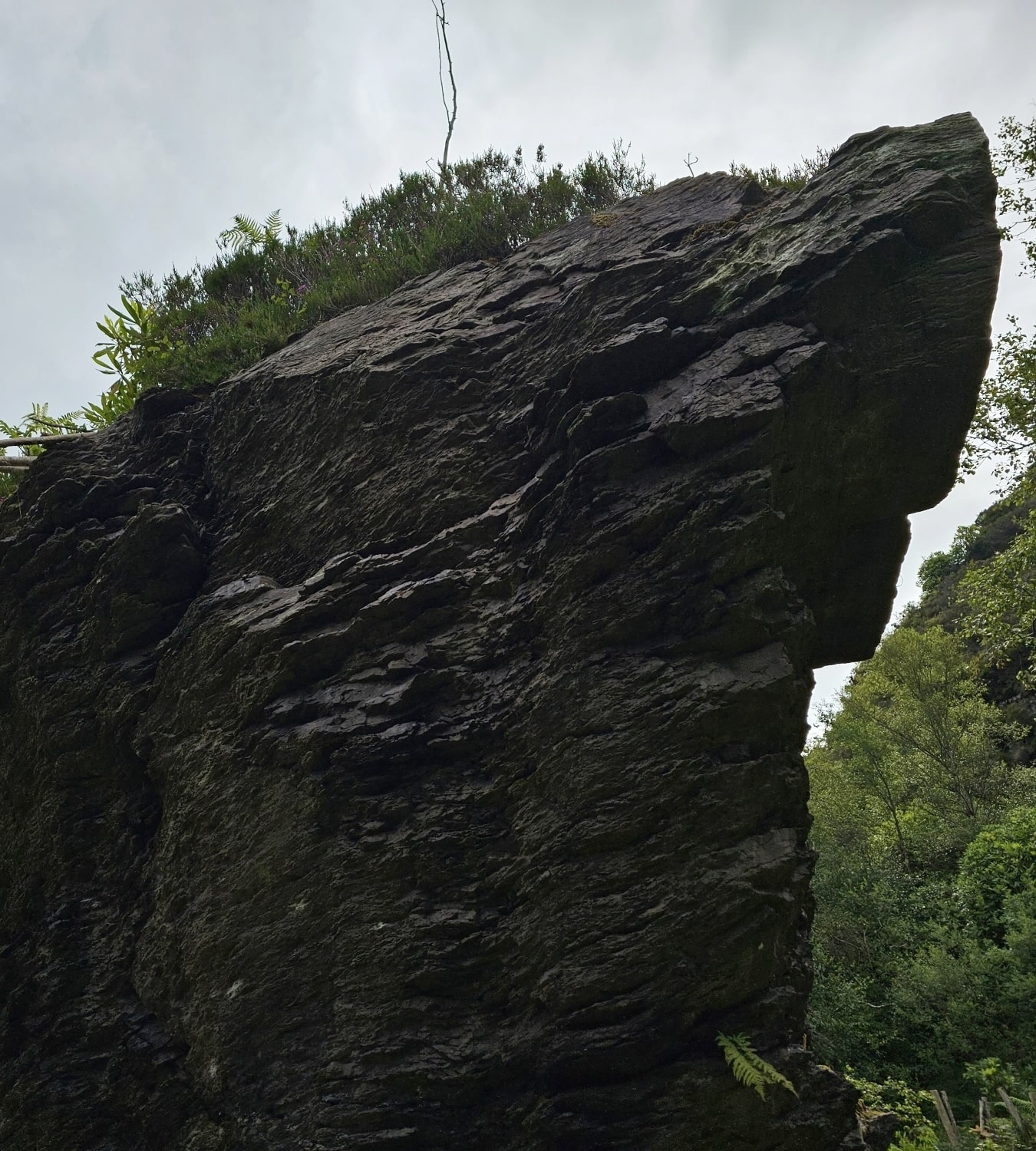
The Mass Rock at Inse an tSagairt in the town land of Innisfoyle was used to celebrate mass during penal times (1539–1829).
Bonane in Stone age Times
The first settlers arrived about 6,000 years ago and the wealth of multi-period archaeological monuments found in Bonane provides an indelible link to these people. These monuments are amongst the best preserved in Western Europe, due in particular to the relatively poor quality of the soil with a consequent absence of intensive or mechanised farming methods. The recent discovery of Rock Art, one of the few examples in the Beara Peninsula, may indicate even earlier habitation! The early history of Bonane is literally written in stone and it makes fascinating reading!
Arrivial of christianity
The arrival of Christianity marked a decline in the old order and the dawn of a new era. Many of the existing religious and ceremonial sites of the Druids were Christianised and adapted by the new religion. The founding of the first church by Saint Fiachna, the patron saint of the parish, at Droum-Fiachna, in the townland of Garranes is a case in point. The unique Bullaún stone nearby, known as the Rolls of Butter, while closely associated in legend with the saint, is believed to have been used by the Druids as a ceremonial site. The present ruins in Saint Fiachna’s Cemetery, which may well have replaced an earlier church, or churches, dates from the post-Norman period.
Post Norman Period
The remains of three other churches from this period are to be found in Bonane. The earliest, Faill a Shéipéil, at Gearhabuí is now a mere outline. The next, Sheana-Shéipéil, the ruins of which are still clearly visible near Bunane Bridge, was in use until about 1840. It was described in 1839, by the then Parish Priest, Michael Enright as one “with tottering walls… wretchedly confined unsafe cabin”.
Shortly thereafter a new church was constructed at Milleens, on the site where the present church stands. One wall of this church is still well preserved. It was a relatively low structure with the Sanctuary at the northern end, which is opposite to the arrangement in the present day Saint Fiachna’s Church. The present church dates from 1892 and is built of local stone. The nearby Presbytery was completed two years later. Prior to its construction the priests of the parish resided at Releagh. The residence there was built for the engineer in charge of the construction of the New Line road through the Tunnels to Glengarriff.
The 19th Century In Bonane
The early 19th Century saw a relaxation of the harsh penal code of earlier centuries and an explosion in population, due largely to the abundant food source provided by the potato. By 1826 there were two schools in Bonane, one at Dromagorteen and the other at Tulloha. These schools almost certainly began as undercover or “hedge schools” during penal times, when the education of Catholics was forbidden. The first national school opened at Tulloha on 2 January 1837. This school served the “scholars” until 1999, when a new school was opened, on the same site. On 15 April 1847 a second national school opened at Gortnabinny to serve the western part of the parish. This school was ultimately amalgamated with Tulloha school in 1967.
By 1840 the Parish Priest, Michael Enright, was able to openly petition for funds for a new church at Milleens – a far cry from the repression of the penal laws! Fr. Michael Sheehan, P.P., 1858-1870, was the last priest in the Parish who used Irish as the sole medium of preaching and instruction. He also changed the place of residence of the Parish Priest from Esk na Muice, in Glengarriff, To Releagh, Bonane. Subsequent to this change Bonane replaced Kilcascan as the official title of the parish.
The Census of 1841 showed that the population had swollen to 1379 souls. The failure of the potato crop in 1847 and 1848 led to widespread famine, death and immigration, with devastating effects on the population. The Census of 1871 showed a drop in population to 905, a trend, that continued throughout the remainder of the 19th and 20th centuries.
Recent Times
The opening of a new school in 1999, the first in 152 years, was a vote of confidence in the future of Bonane. The legendary “Spirit of Bonane” was seen as never before as the local community united to get this project off the ground. The success of the Millennium celebrations was the envy of other communities and a testament to what community spirit is all about. The Bonane community looks to the future with confidence. There are other ambitious projects in the pipeline. The “Spirit of Bonane” is alive and well!
 Bonane