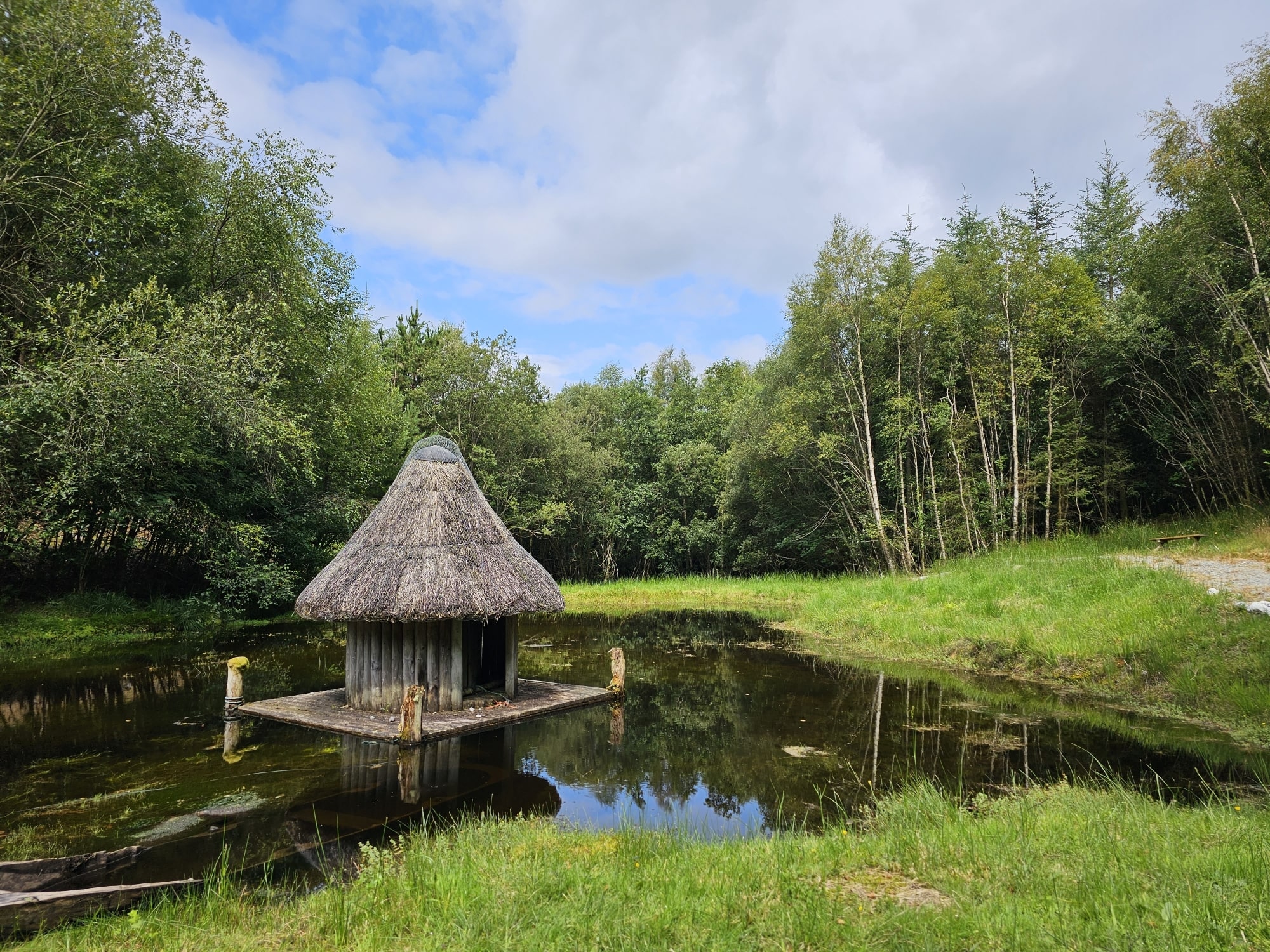
Bonane Heritage Park
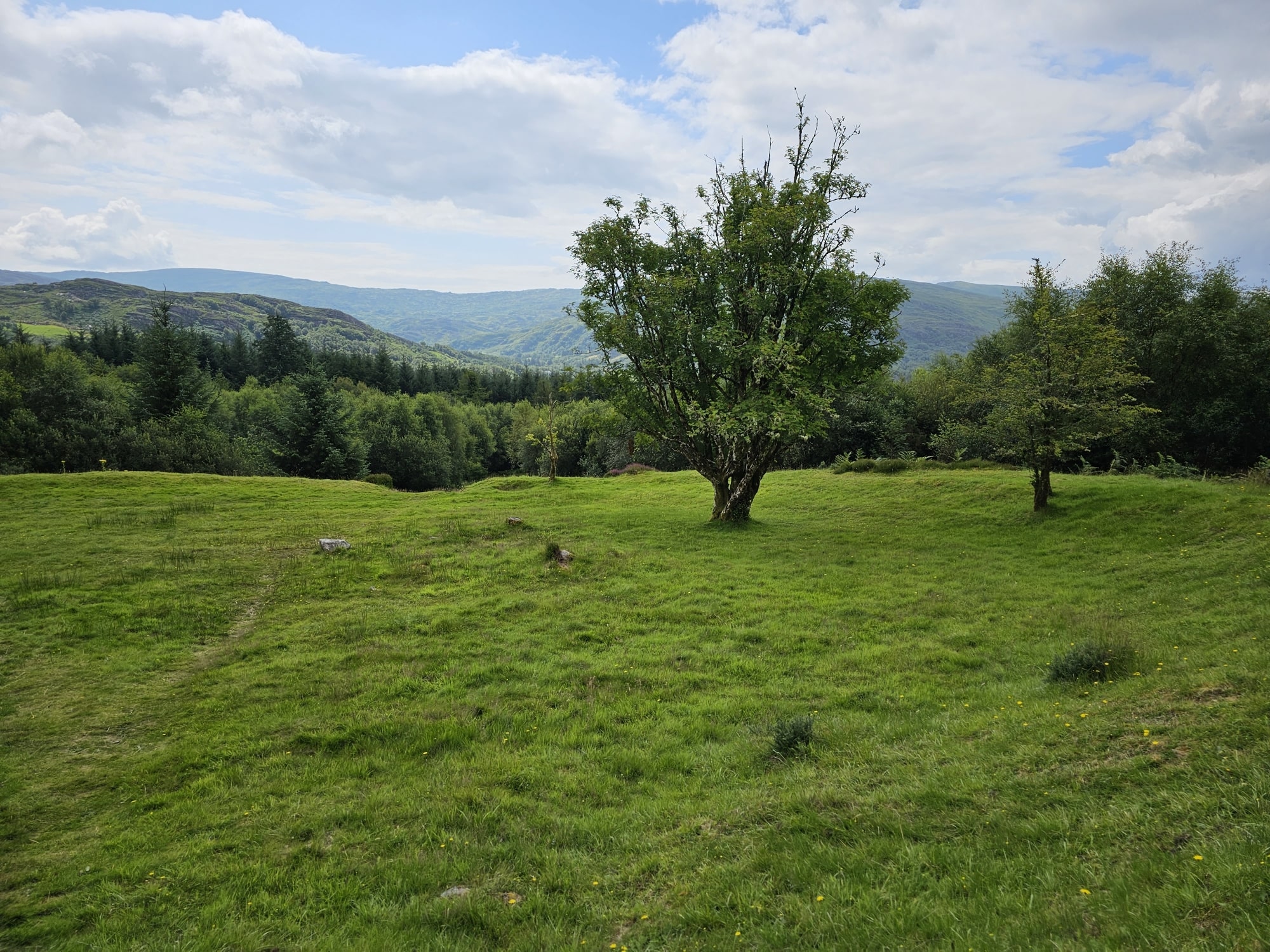
Bonane Heritage Park is one of the most significant archaeological sites in Ireland. Whether you are interested in history and heritage, or just looking to embrace all that makes Ireland truly special, a visit won’t disappoint. It’s located just off the N71 between Kenmare and Glengarriff. While exploring the seven multi-period heritage sites, enjoy the beautiful scenic views of the Sheen Valley, as well as the Shehy and Caha Mountains.
The Ring Fort, once used as a fortified dwelling and farmstead, is still impressive some 1,500 years after construction. It’s one of the largest ring forts in Ireland and one of several in the Sheen Valley. The deep perimeter ditch and double earthen embankment (or fosse) were constructed manually of course and using only primitive tools. The circular construction is thought by archaeologists, to be for defensive purposes but may also have had a spiritual significance. In later centuries, many superstitions were associated with ring forts and it was considered unlucky to cultivate or interfere with them. Ring forts are also known as fairy forts due to the long-held traditional belief that they are the home of fairies or little people.
The Famine Ruins. This small dwelling is a typical building of the early nineteenth century when large families were reared in primitive conditions. The roof would have been thatched with straw or reed. There are several of these ruins in the area. In fact the adjoining town land of Curragraigue, meaning “old village”, and the field systems to be found within the park, indicate that this was once quite a densely populated area.
The Stone Circle & Boulder Burial. This is a fine example of a multiple stone circle, dating from the Late Stone Age/Early Bronze Age (3,000–2,000 BC). The large boulder burial in the centre, is propped in place by smaller stones above a shallow pit. Sometimes these pits have been found to contain cremated human remains in a communal burial. The Stone Circle was associated with Druid rituals and used as a ceremonial site as part of an ancient solar and lunar calendar. This Stone Circle here in Bonane Heritage Park, is one of the most significant of its kind in Ireland – having several solar and lunar alignments.
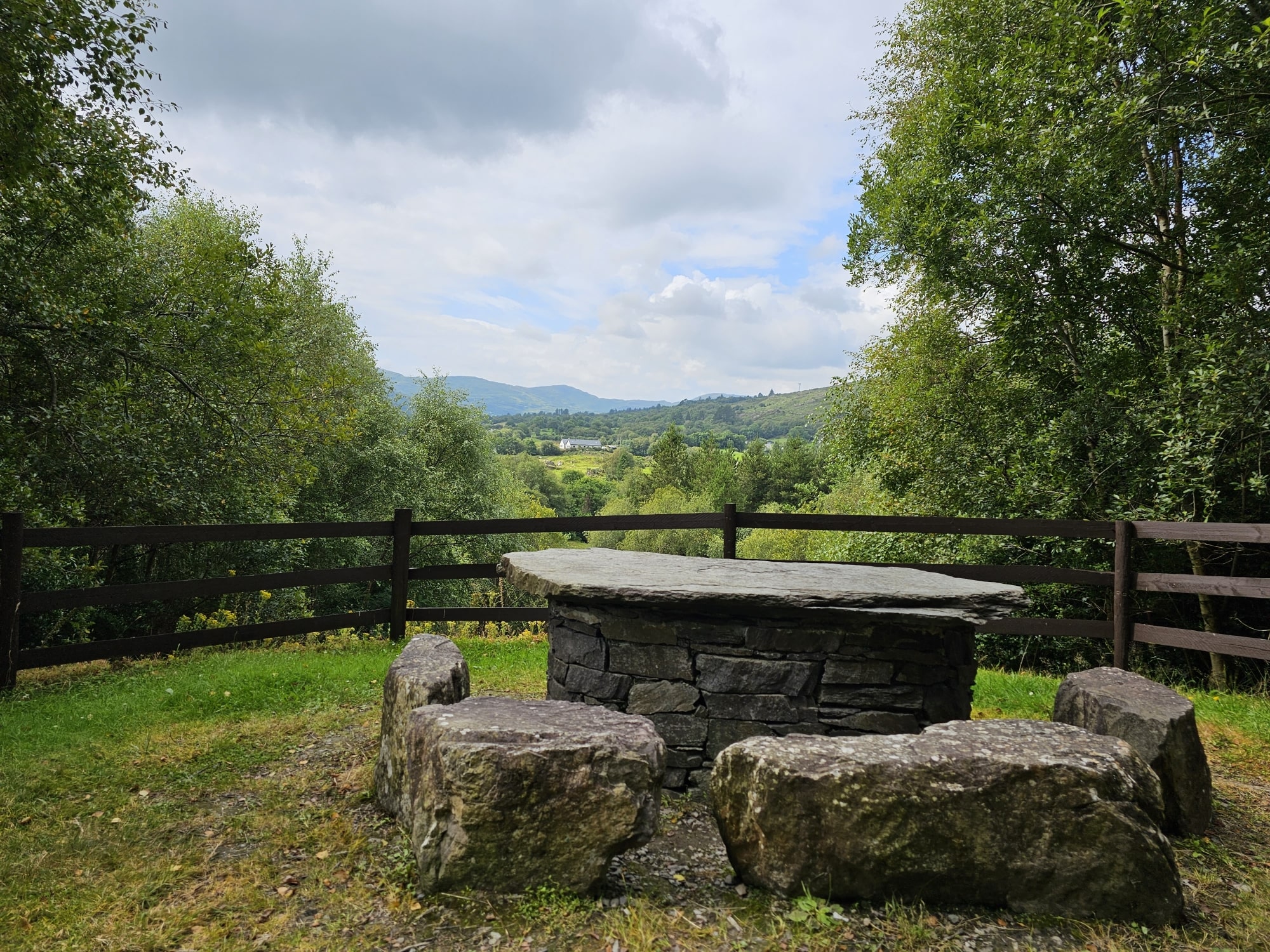
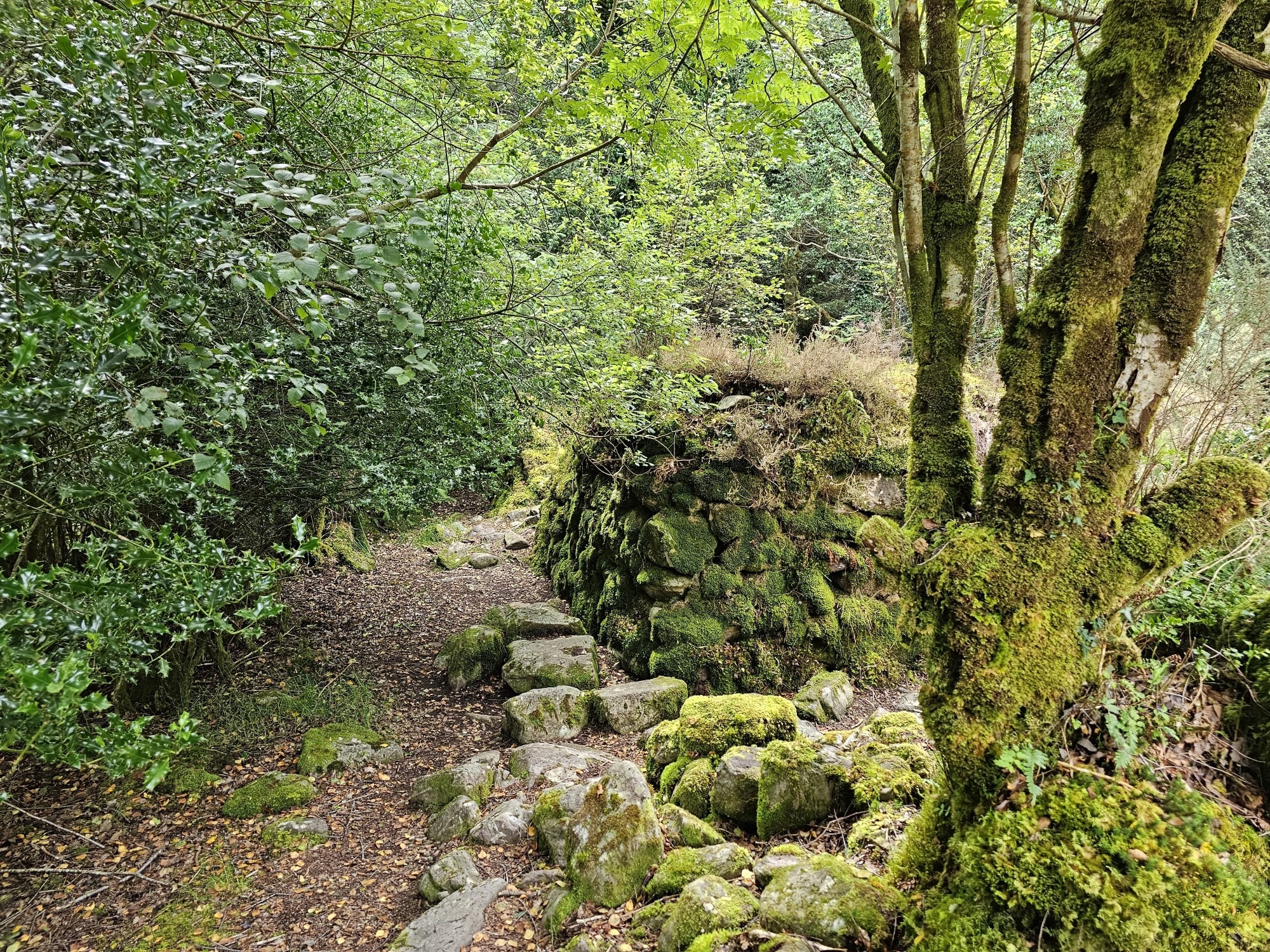
Fulacht Fiadh is the name given to an ancient cooking pit from the Bronze Age. They were generally located beside a source of fresh water. A pit or hole was dug and flled with clean water which was then brought to the boil, by placing heated stones in it. Fresh meat wrapped in straw, was cooked in this manner. With continued use, the stones became fragmented by the heat and were discharged nearby, resulting in the nearby ‘horseshoe-shaped’ mound. Fulacht Fiadhs may also have been used for ritual purposes. This theory is supported by the example here, which is in close proximity to the stone circle, and is positioned directly on the alignment of the mid-summer sunrise.
A Bullaun Stone is a large rock out of which a basin or bullaun has been carved. Normally bullauns face upwards but this example is unusual in that the basin is at an angle to the horizontal – due to the position of the stone. There are also a number of smaller holes drilled into the rock. The stone’s original purpose is unclear, but it might have had astronomical relevance, as the bullaun faces in the direction of the mid-winter sunrise position.
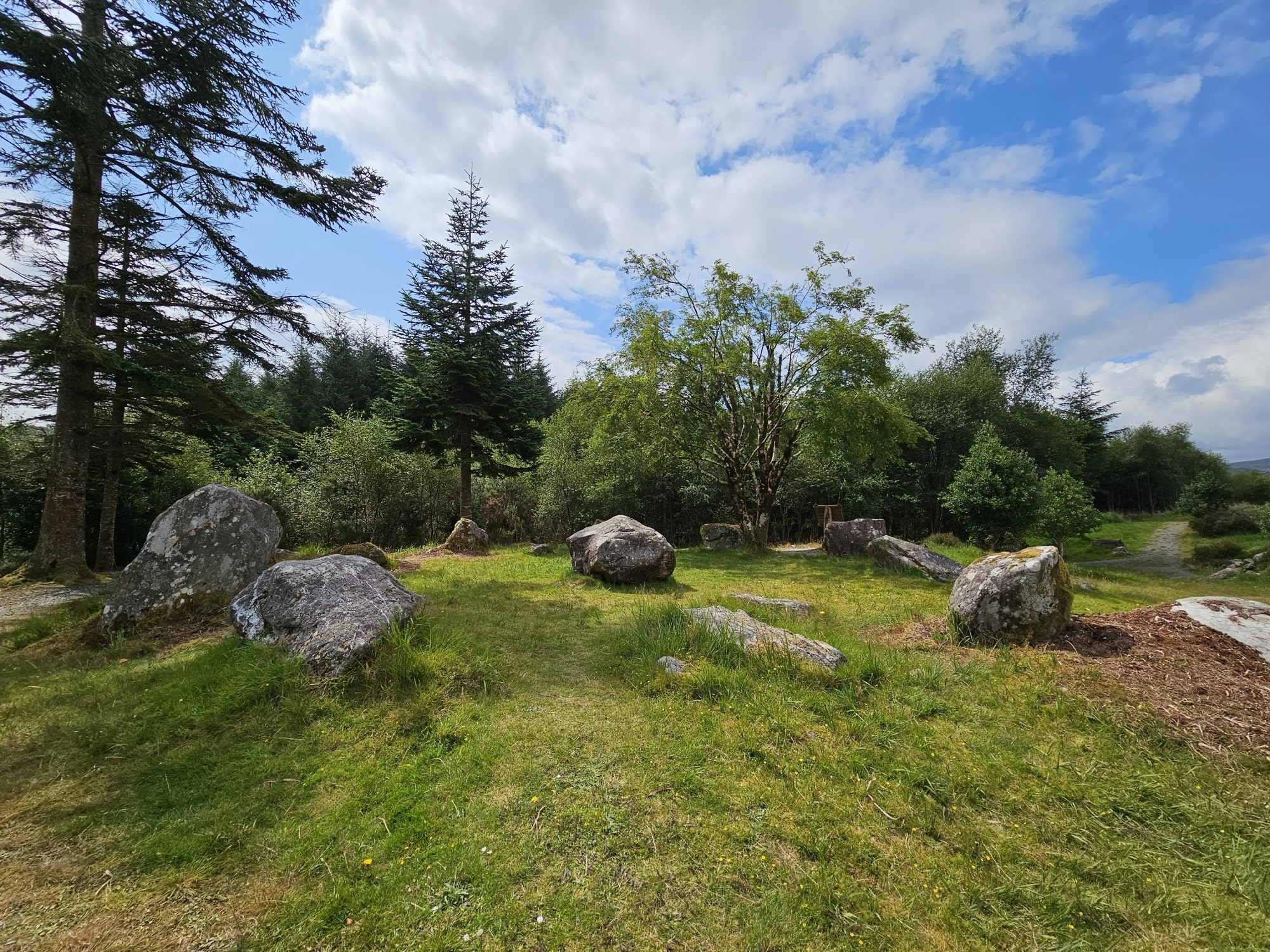
Standing Stones are the most abundant megalithic monuments found in Ireland but there is no definitive theory about their original purpose. They may have marked boundaries or burial sites.
Ring Fort. Across the pathway, opposite the Standing Stone, youll find the entrance to the rear of the Ring Fort. This vantage point gives a better impression of the overall size of the fort and the depth of the hand-made fosse. We can only imagine the number of man-hours involved in the construction of the fort considering the primitive tools they had at the time!
 Bonane